25-27 September, 2026 | Stockholm
Epochality: Art and the Limits of the Present
Epochs organise and narrativize time and shape our way of seeing both the past and imagining the future. These metered and ordered descriptions blind us to our own present. Our self-reflection of being-in-a-time-period, within-an-era, shapes what can be thought, experienced, or known at all. The removed distance needed to describe and interpret periods of social reorganisation, industrial development, political upheaval and technological advancements is always imperfectly present. To live inside an epoch is to feel its weight, its pressure, its perplexities but to be perpetually behind in our understanding of it. How do we cope with being too late, and what are the implications for what is to come? How do we act with what can only be imperfect knowledge?
Access the digital sessions on September 25 here.
Learn more about the event here.
Read CAPIm’s first Annual Report (2024), released at the 2025 symposium.
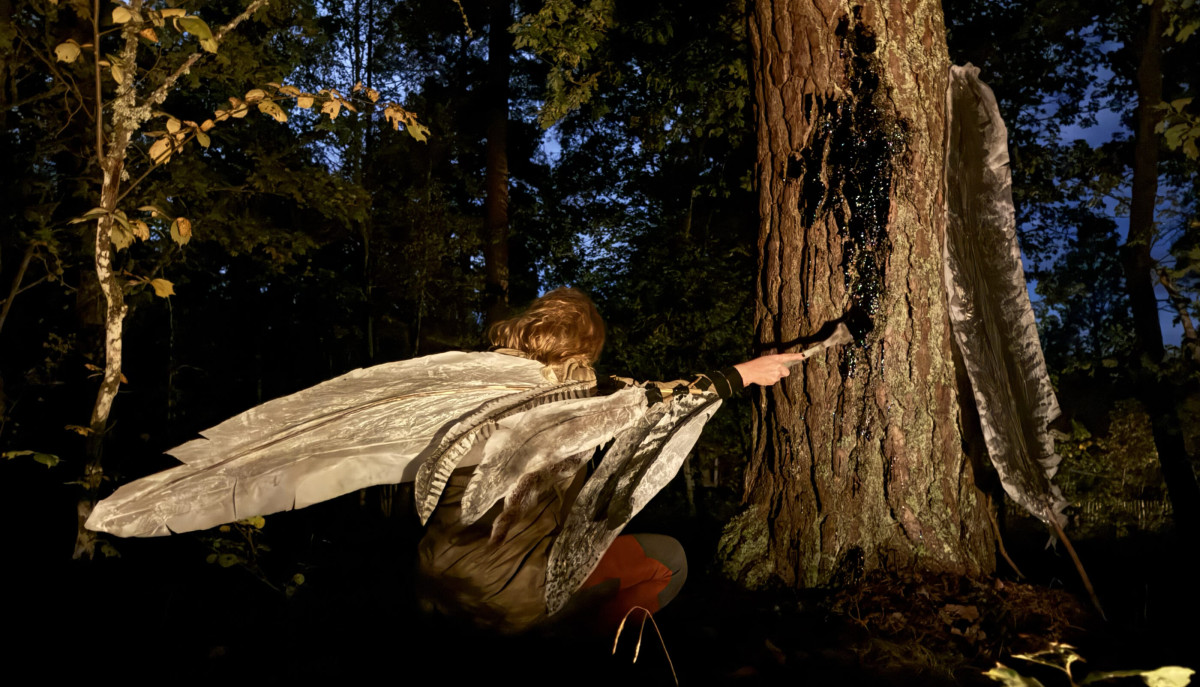
Welcome to the 2026 Research Annual
Alice Chauchat Senior Guest Researcher at CAPIm 2026
We are delighted to welcome choreographer Alice Chauchat as Senior Guest Researcher at CAPIm.
Based in Berlin, Alice’s practice unfolds through collaboration as a lived condition—where distance, alterity, and de-centering become generative forces. Trained in Lyon and at P.A.R.T.S. Brussels, she has worked with artists including Xavier Le Roy, Anne Juren, Tino Sehgal, and Juan Dominguez.
Since 2014, she has developed Togethering, an ongoing choreographic research into the ethics of intimacy across radical difference—activating practices of not-knowing, approximation, and shared attention across studios, stages, and public space.
Public Lecture: Affordances and Study
27 April | Stockholm
Valentina Desideri and Stefano Harney will share reflections from their on-going collaboration, which is a capacious examination of the senses in search of less individuated way to understand knowledge production. Together they move away from a traditional Eurocentric production of subjects and objects of study and towards the notion of affordances as an alternative approach to perception.
Scientists have identified eight independent senses in our bodies, however three of them (proprioception, interoception and vestibular sense) are ‘ranked’ lower than the more familiar five senses and have largely been confined to specialized knowledge, such as psychology or dance.
Learn more & register.
Revisit the keynotes from CAPIm Research Annual 2025
Ahead of this year’s CAPIm Research Annual, revisit the opening and closing keynotes from 2025. Watch the recorded talks by María Galindo and Stefan Jonsson and learn more about their work.
CAPIm c/o Solastalgia Pangolin: Invitation to Residency in May 2026
Applications are open until 10 April 2026
CAPIm, in collaboration with artists Signe Johannessen and Erik Rören, invites applications for short residencies in Solastalgia Pangolin during May 2026. Located in Mölnbo, this unique sculpture, cabin, and “field hospital for the mind” offers time and space to read, think, write, rest, and work in close relation to a changing natural environment. The residency is open to students and staff at HDK-Valand and KKH, as well as researchers connected to the Swedish Research Council’s Centres of Excellence.
Curatorial Program for Research: (Self)Organization in North Africa
4-25 May | Algeria, Morocco and Tunisia
A three-week curatorial program for collective research organized by Susanne Ewerlof, doctoral candidate at HDK-Valand, CAPIm co-director Natasha Marie Llorens, and freelance curators Myriam Amroun and Carmen Ferreyra in Algeria, Morocco and Tunisia interogating artistic and curatorial organizational strategies as instances of “minor transnational” political imagination. More.
This is an associated initiative of CAPIm.
Introduction to Contemporary Arts and Politics, Summer 2026
9 June - 28 August | Online
This summer course has been conceived as an introductory course that addresses how contemporary arts (includes visual arts photography, film, and literature) interact or otherwise connect with the question of political imaginaries.
The student is introduced to key themes through the study of concrete examples. The course adopts an inquiry-based approach. By considering a range of situations where questions of art and questions of politics intersect, we seek to gradually build a wider model or structural account of relations between these. The course is therefore not premised on a pre-resolved theory of “art and politics”. Instead, it provides a survey of instances where themes and questions of politics and the political, and of art and the aesthetic, intersect. Among the concepts tested in this inquiry-based approach is that of the political imaginary. However, as an associated initiative of CAPIm the course is driven by an open research agenda, rather than a resolved theoretical position.
More.
Facilitated by: Seda Yildiz, Kerry Guinan, Michele Masucci and Prof. Mick Wilson
The Politics and Aesthetics of Hyper-Scales
January 2026 - January 2027 | Online
Dr. Kerry Guinan invites researchers, practitioners, and students to participate in a recurring online research seminar, ‘The Politics and Aesthetics of Hyper-Scales’, to support and expand upon her postdoctoral project within CAPim. The project explores how perceptions of scale structure and limit political imaginaries, aiming to develop artistic methodologies that can potentially reorganise spatio-temporal experience, and analysing how such strategies may affect ethico-political sensibilities of responsibility, causality, and agency
Building upon this investigation, this seminar series will examine a vast range of topics that challenge anthro-phenomenal projections of space and time, expanding critical thought to the reach of cosmic and planetary politics and probing the potential political implications of, for instance, microbial ecologies and subatomic processes. It will address the politics of timescales ranging from the digitally instant to the geologically incremental, while questioning the very structuring of time and space by capitalist and colonial regimes.
More.
Facilitated by: Kerry Guinan
Writing Research | Research Writing
25 February-30 June, 2026 | Online
In this course the student will engage with various modes of writing pertaining to artistic research and its connected fields. The course consists of text seminars; lectures; collaborative and individual writing exercises; and two workshops (on artistic research publishing and on publication production processes). Thematically it is oriented around questions of method, process, ethics and aesthetics, specifically considering aspects of authorship and relations between languages, texts and meaning–matter. There will be a focus on the role and possibilities of writing in relation to the student’s own research project and the different artistic field(s) and disciplines of the particpants.
More.
Facilitated by: Khashayar Naderehvandi, Mick Wilson and Kerry Guinan
Welcome to CAPIm
The Centre for Art and the Political Imaginary is committed to interdisciplinary practice and research in the meeting between contemporary art and the future of politics. Based at two institutions of higher education in art: HDK-Valand and Kungl. Konsthögskolan, the Centre’s aim is to facilitate connections between research and education through an engagement with experimental approaches. It is the first Swedish Centre of Excellence in the field of Artistic Research.
The activities of the Centre are organised around four conceptual strands guiding the construction of innovative educational and research frameworks. Climate Imaginaries engage with radical ecological change and environmental futures. Historical Imaginaries addresses decolonial approaches to collective memory and nationalist representations, as well as non-aligned movements and intensifying globalisation. Democratic Imaginaries takes its point of departure from the polarisation of the public sphere and emerging forms of illiberalism. Technological Imaginaries is focused on the interactions between art and technological developments and their resulting projections of possible futures.
The Centre’s Steering Committee comprises Axel Andersson, Jyoti Mistry, Klara Björk, Mick Wilson, Sanne Kofod Olsen and Valentina Desideri.
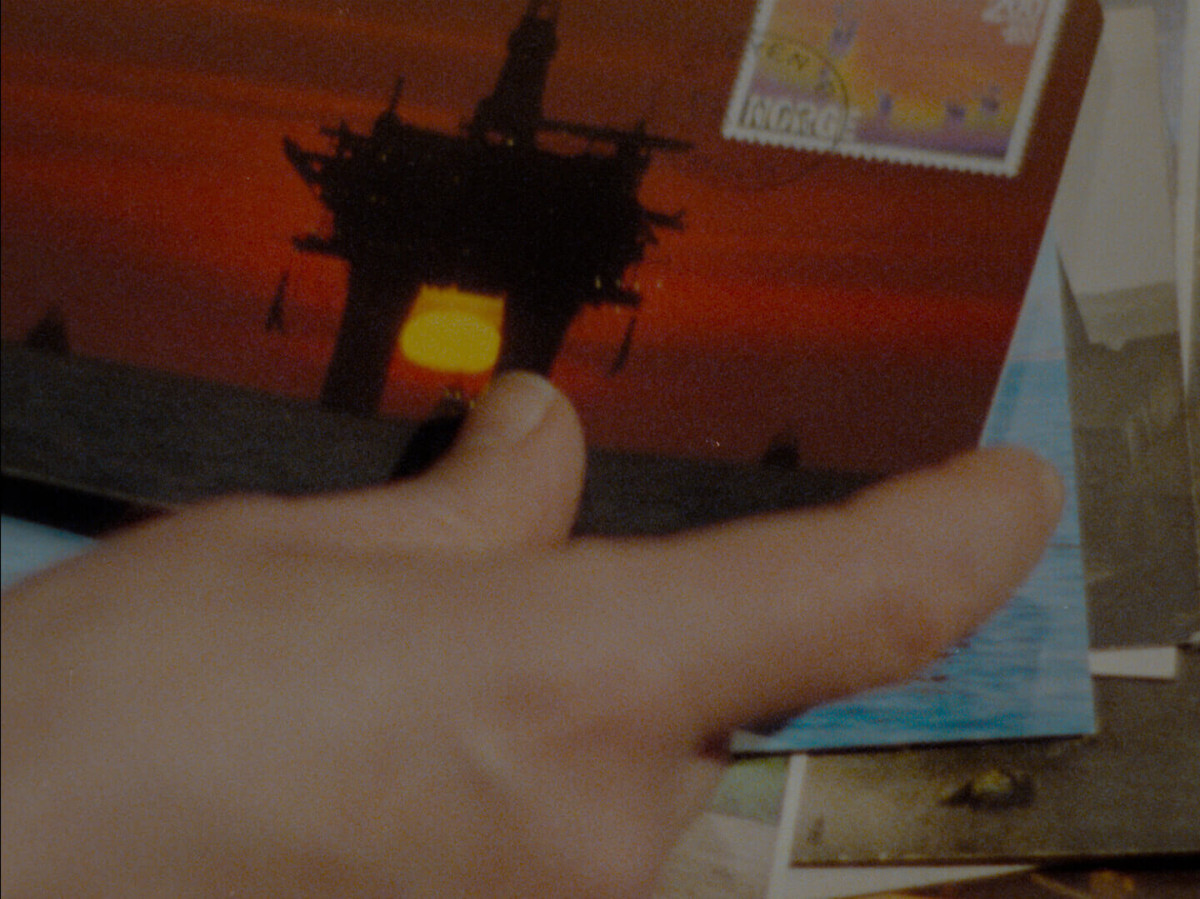
CAPIm’s activities are designed to nourish the curriculum of the PhD program at HDK-Valand and in the MA program at KKH. CAPIm also provides national and international access to educational opportunities informed by the latest developments in artistic research and the study of political imaginaries. Some courses are designed specifically by CAPIm faculty and guest researchers, while others are affiliated based on thematic overlap.
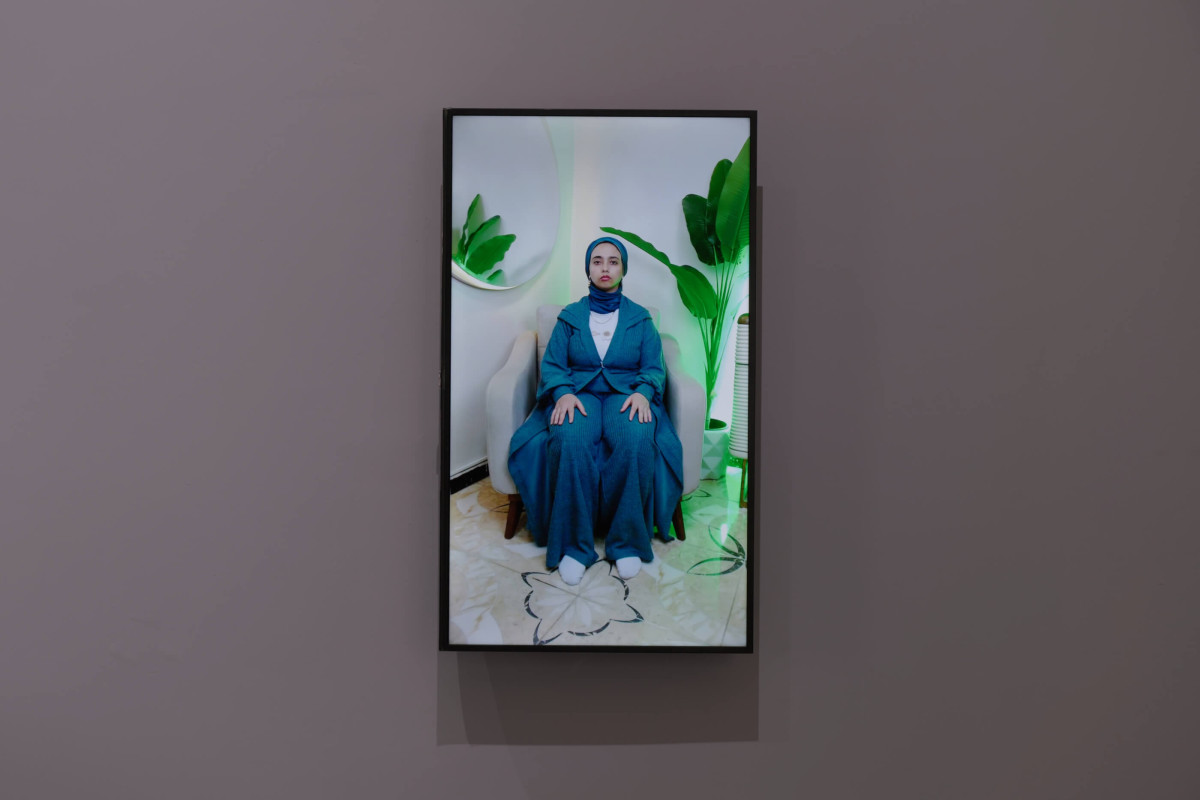
CAPIm functions as an infrastructure to support new research initiatives and aggregate existing research in the field. Associated research consists of both projects led and executed by CAPIm staff and collaborations with those external to its core faculty.
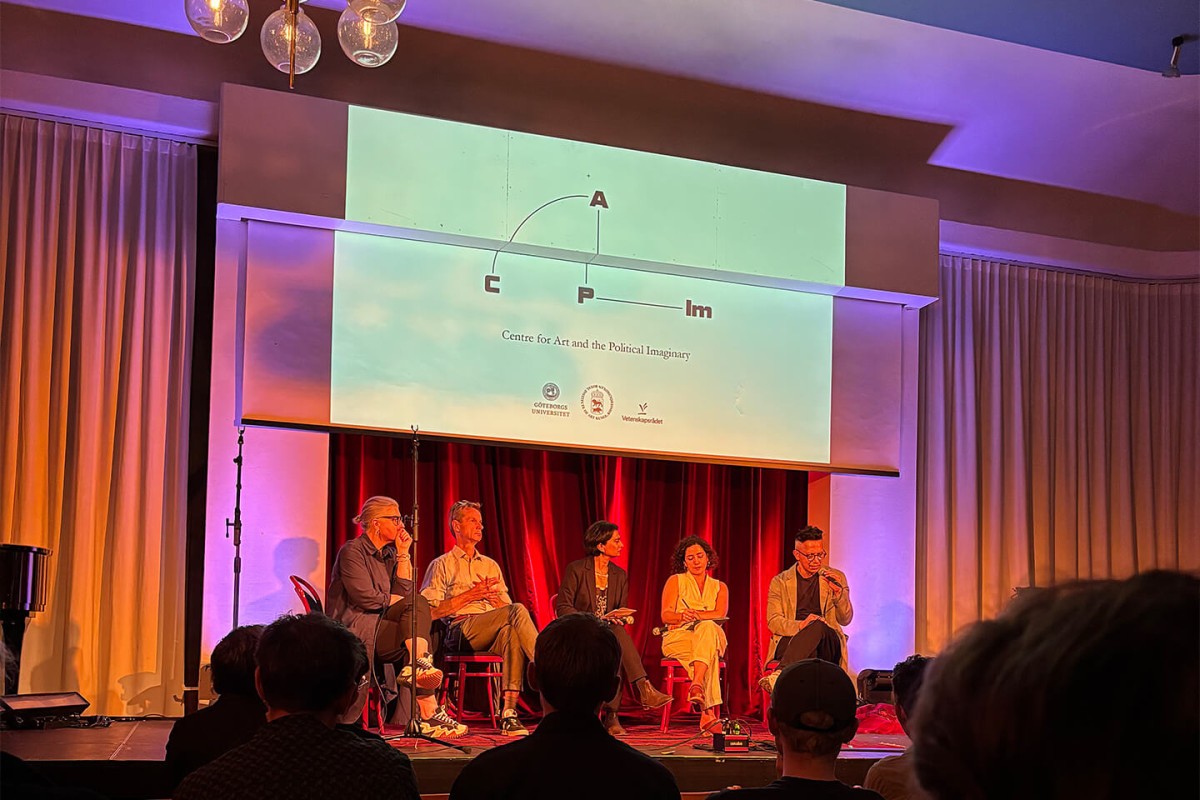
The advisory board meets four times annually to provide external perspective on the Centre’s thematic investments, strengthen its collaborations both nationally and internationally, and contribute with their own research through participation in CAPIm’s annual conference.
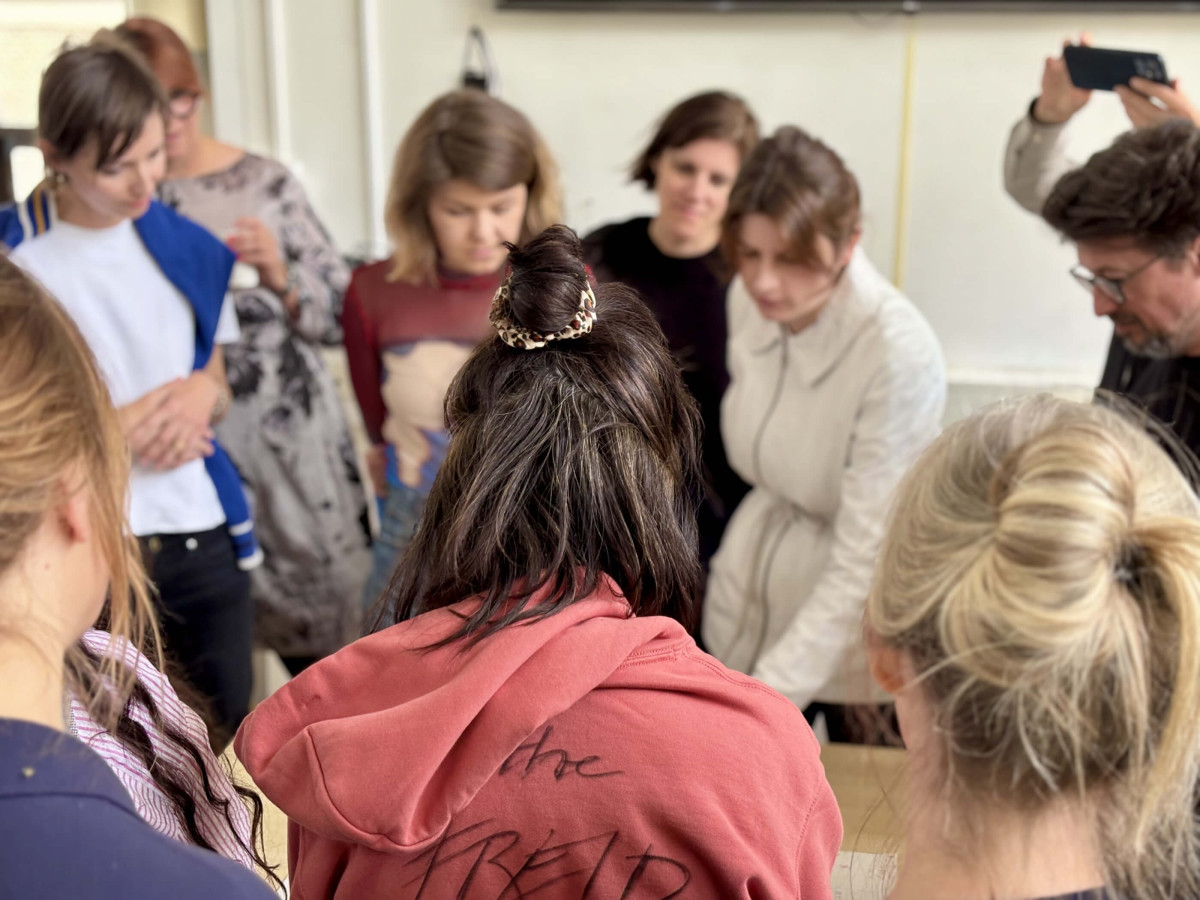
Visit our events page to learn more, stay updated, and register for our upcoming events.
Welcome to CAPIm
The Centre for Art and the Political Imaginary is committed to interdisciplinary practice and research in the meeting between contemporary art and the future of politics. Based at two institutions of higher education in art: HDK-Valand and Kungl. Konsthögskolan, the Centre’s aim is to facilitate connections between research and education through an engagement with experimental approaches. It is the first Swedish Centre of Excellence in the field of Artistic Research.
The activities of the Centre are organised around four conceptual strands guiding the construction of innovative educational and research frameworks. Climate Imaginaries engage with radical ecological change and environmental futures. Historical Imaginaries addresses decolonial approaches to collective memory and nationalist representations, as well as non-aligned movements and intensifying globalisation. Democratic Imaginaries takes its point of departure from the polarisation of the public sphere and emerging forms of illiberalism. Technological Imaginaries is focused on the interactions between art and technological developments and their resulting projections of possible futures.
The Centre’s Steering Committee comprises Axel Andersson, Jyoti Mistry, Klara Björk, Mick Wilson, Sanne Kofod Olsen and Valentina Desideri.
CAPIm’s activities are designed to nourish the curriculum of the PhD program at HDK-Valand and in the MA program at KKH. CAPIm also provides national and international access to educational opportunities informed by the latest developments in artistic research and the study of political imaginaries. Some courses are designed specifically by CAPIm faculty and guest researchers, while others are affiliated based on thematic overlap.
CAPIm functions as an infrastructure to support new research initiatives and aggregate existing research in the field. Associated research consists of both projects led and executed by CAPIm staff and collaborations with those external to its core faculty.
The advisory board meets four times annually to provide external perspective on the Centre’s thematic investments, strengthen its collaborations both nationally and internationally, and contribute with their own research through participation in CAPIm’s annual conference.
Visit our events page to learn more, stay updated, and register for our upcoming events.
Welcome to the 2026 Research Annual
25-27 September, 2026 | Stockholm
Epochality: Art and the Limits of the Present
Epochs organise and narrativize time and shape our way of seeing both the past and imagining the future. These metered and ordered descriptions blind us to our own present. Our self-reflection of being-in-a-time-period, within-an-era, shapes what can be thought, experienced, or known at all. The removed distance needed to describe and interpret periods of social reorganisation, industrial development, political upheaval and technological advancements is always imperfectly present. To live inside an epoch is to feel its weight, its pressure, its perplexities but to be perpetually behind in our understanding of it. How do we cope with being too late, and what are the implications for what is to come? How do we act with what can only be imperfect knowledge?
Access the digital sessions on September 25 here.
Learn more about the event here.
Read CAPIm’s first Annual Report (2024), released at the 2025 symposium.
Alice Chauchat Senior Guest Researcher at CAPIm 2026
We are delighted to welcome choreographer Alice Chauchat as Senior Guest Researcher at CAPIm.
Based in Berlin, Alice’s practice unfolds through collaboration as a lived condition—where distance, alterity, and de-centering become generative forces. Trained in Lyon and at P.A.R.T.S. Brussels, she has worked with artists including Xavier Le Roy, Anne Juren, Tino Sehgal, and Juan Dominguez.
Since 2014, she has developed Togethering, an ongoing choreographic research into the ethics of intimacy across radical difference—activating practices of not-knowing, approximation, and shared attention across studios, stages, and public space.
Public Lecture: Affordances and Study
27 April | Stockholm
Valentina Desideri and Stefano Harney will share reflections from their on-going collaboration, which is a capacious examination of the senses in search of less individuated way to understand knowledge production. Together they move away from a traditional Eurocentric production of subjects and objects of study and towards the notion of affordances as an alternative approach to perception.
Scientists have identified eight independent senses in our bodies, however three of them (proprioception, interoception and vestibular sense) are ‘ranked’ lower than the more familiar five senses and have largely been confined to specialized knowledge, such as psychology or dance.
Learn more & register.
Revisit the keynotes from CAPIm Research Annual 2025
Ahead of this year’s CAPIm Research Annual, revisit the opening and closing keynotes from 2025. Watch the recorded talks by María Galindo and Stefan Jonsson and learn more about their work.
CAPIm c/o Solastalgia Pangolin: Invitation to Residency in May 2026
Applications are open until 10 April 2026
CAPIm, in collaboration with artists Signe Johannessen and Erik Rören, invites applications for short residencies in Solastalgia Pangolin during May 2026. Located in Mölnbo, this unique sculpture, cabin, and “field hospital for the mind” offers time and space to read, think, write, rest, and work in close relation to a changing natural environment. The residency is open to students and staff at HDK-Valand and KKH, as well as researchers connected to the Swedish Research Council’s Centres of Excellence.
Curatorial Program for Research: (Self)Organization in North Africa
4-25 May | Algeria, Morocco and Tunisia
A three-week curatorial program for collective research organized by Susanne Ewerlof, doctoral candidate at HDK-Valand, CAPIm co-director Natasha Marie Llorens, and freelance curators Myriam Amroun and Carmen Ferreyra in Algeria, Morocco and Tunisia interogating artistic and curatorial organizational strategies as instances of “minor transnational” political imagination. More.
This is an associated initiative of CAPIm.
Introduction to Contemporary Arts and Politics, Summer 2026
9 June - 28 August | Online
This summer course has been conceived as an introductory course that addresses how contemporary arts (includes visual arts photography, film, and literature) interact or otherwise connect with the question of political imaginaries.
The student is introduced to key themes through the study of concrete examples. The course adopts an inquiry-based approach. By considering a range of situations where questions of art and questions of politics intersect, we seek to gradually build a wider model or structural account of relations between these. The course is therefore not premised on a pre-resolved theory of “art and politics”. Instead, it provides a survey of instances where themes and questions of politics and the political, and of art and the aesthetic, intersect. Among the concepts tested in this inquiry-based approach is that of the political imaginary. However, as an associated initiative of CAPIm the course is driven by an open research agenda, rather than a resolved theoretical position.
More.
Facilitated by: Seda Yildiz, Kerry Guinan, Michele Masucci and Prof. Mick Wilson
The Politics and Aesthetics of Hyper-Scales
January 2026 - January 2027 | Online
Dr. Kerry Guinan invites researchers, practitioners, and students to participate in a recurring online research seminar, ‘The Politics and Aesthetics of Hyper-Scales’, to support and expand upon her postdoctoral project within CAPim. The project explores how perceptions of scale structure and limit political imaginaries, aiming to develop artistic methodologies that can potentially reorganise spatio-temporal experience, and analysing how such strategies may affect ethico-political sensibilities of responsibility, causality, and agency
Building upon this investigation, this seminar series will examine a vast range of topics that challenge anthro-phenomenal projections of space and time, expanding critical thought to the reach of cosmic and planetary politics and probing the potential political implications of, for instance, microbial ecologies and subatomic processes. It will address the politics of timescales ranging from the digitally instant to the geologically incremental, while questioning the very structuring of time and space by capitalist and colonial regimes.
More.
Facilitated by: Kerry Guinan
Writing Research | Research Writing
25 February-30 June, 2026 | Online
In this course the student will engage with various modes of writing pertaining to artistic research and its connected fields. The course consists of text seminars; lectures; collaborative and individual writing exercises; and two workshops (on artistic research publishing and on publication production processes). Thematically it is oriented around questions of method, process, ethics and aesthetics, specifically considering aspects of authorship and relations between languages, texts and meaning–matter. There will be a focus on the role and possibilities of writing in relation to the student’s own research project and the different artistic field(s) and disciplines of the particpants.
More.
Facilitated by: Khashayar Naderehvandi, Mick Wilson and Kerry Guinan