CAPIm Research Annual 2026
25-27 September
The Royal Institute of Art, Stockholm and Epoken, Mölnbo
Participate on-site or online via Zoom here
Epochality: Art and the Limits of the Present
Epochs organise and narrativize time and shape our way of seeing both the past and imagining the future. These metered and ordered descriptions blind us to our own present. Our self-reflection of being-in-a-time-period, within-an-era, shapes what can be thought, experienced, or known at all. The removed distance needed to describe and interpret periods of social reorganisation, industrial development, political upheaval and technological advancements is always imperfectly present. To live inside an epoch is to feel its weight, its pressure, its perplexities but to be perpetually behind in our understanding of it. How do we cope with being too late, and what are the implications for what is to come? How do we act with what can only be imperfect knowledge?
The second Research Annual of the Centre of Art and the Political Imaginary is an invitation to consider, explore and reflexively engage with shifting from the description of epoch/s to consider not just the concept of epochality but to address how and what it may imply for our ability to imagine with self-imposed limitations – to put a future within brackets. The inability of Western late capitalism to see itself through nothing more than negations is striking as we describe the world through a series of disorientations, monstrous transitions, bewildered confusions and ruptures from permacrisis to the pronouncement of the Anthropocene that declares no practical ends to human interference on the planet; nullifying limits, which announce an epoch to end all epochs.
From the notion of epochality, we invite an examination of the role of art to imagine, to think, to make otherwise as of paramount political importance. Art holds the possibility of imagining, to momentarily conceive of stepping outside of our epoch, to possibly perceive the horizon beyond and to sense, to feel the edges of our time. We suggest that the notion of epochality brings to focus the centrality and entanglement of time in artistic practices and aesthetic discourses for our shared political future.
In order to think together on epochality, imagination and the limits of the present we are delighted to host a keynote by Professor Yuk Hui (Erasmus University Rotterdam), whose work has contributed one of the most sustained and influential bodies of contemporary thinking on technicity, art and our epochal condition(s). Our investigation of epochality will also take us to the newly initiated art centre “Epoken” in Mölnbo, directed by artists Signe Johannessen and Erik Rören for an embodied and aesthetic making of new time. We invite you to take time to practice new forms of attention where we work through art practices that possibly disrupt catastrophic thinking.
Programme
Friday 25 September
At the Royal Institute of Art, Flaggmansvägen 1, Stockholm
Access the digital sessions on September 25 here.
4:15 pm Welcome and introduction
4:30 pm Yuk Hui. Presentation followed by a conversation with discussant Krystof Kasprzak.
Hui is Professor of Philosophy at Erasmus University Rotterdam, where he holds the Chair of Human Conditions and directs the Erasmus Institute for Philosophy and Technology.
Kasprzak received his PhD in philosophy in 2017 from Södertörn University. He is Associate Professor in the Theory of Practical Knowledge and affiliated with the Centre for Practical Knowledge. His work addresses questions of practice and experience, with a current focus on more-than-human relations and forms of life.
6 – 7 pm Reception
Saturday 26 September
Morning: at the Royal Institute of Art, Flaggmansvägen 1, Stockholm
Afternoon: at Epoken in Mölnbo
9 am Welcome to the Second Day of the Annual Symposium
Through presentations we continue our exploration of epochs and epochality, approaching these concepts from a range of perspectives and disciplinary viewpoints. For further details about the speakers, please scroll down.
9:05 am Contemporaries? - by Alice Chauchat
When overview seems impossible or necessarily reductive, when narratives about reality conflict and compete, we might wonder what time(s) we share. In this lecture-performance I will activate and discuss some listening scores I’m currently developing. Orienting attention onto a supposedly common present, these movement practices let us wonder at the similarities and differences between our simultaneous perceptions of where and when we find ourselves, suggesting that inhabiting a moment together is a speculative practice.
9:45 am ROTVÄLTA / föreställning (UPHEAVAL / scenario) - by Kerstin Bergendal
The presentation outlines the artistic research processes in responding to a public art commission from Gothenburg City in 2024 for a monumental square in Gothenburg – Götaplatsen. Using this specific square as a point of departure, I have gathered a gradually expanded collection of all sorts of imagery that could indicate a possible “mental root system”, linked to the square and thus to the current identity of Gothenburg City. This system invites possibilities of how the space may be used and proposes how its historical symbolism may be connected to its imagined future.
Published gradually on a project homepage, this collection was recycled in a public event over five consecutive days of public conversations with ten invited researchers/professionals and am audience which was performed at the City Theatre at Götaplatsen in June 2025.
10:25 am Coffee Break
10:40 am Between Grains and Infrastructures: Scale and Sense-making in the Tankwa Karoo - by Kerry Guinan
In the vast, rocky, semi-desert landscape of the Karoo in South Africa, early hunter-gatherer stone artefacts, vernacular structures of Sān and Khoe-khoe peoples, material legacies of violent colonial agricultural projects, and tourist infrastructures supporting imaginaries of an “untouched landscape” are, at varying scales, geologically inscribed in the land. This paper reflexively examines artistic research conducted in the desert, which materialised in a reconstructed rock composed of grains collected from disturbed sites and an accompanying photographic series. It proposes and analyses an artistic methodology that makes perceptible entangled geological and human temporalities, while foregrounding asymmetries in the scale and impact of human traces in the land.
11:20 am Harvest Time: The Coming Epoch of Agrarian Insurgence - by Michele Masucci
This performative lecture emerges from Michele Masucci’s ongoing artistic research into the rural revolt of Maschito, in Basilicata, in September 1943, when peasants, labourers, and villagers expelled fascist authorities, occupied the Agrarian Consortium, declared a republican municipal order, and reorganised food distribution, taxation, and public administration. Rather than treating Maschito as a minor episode in the national history of anti-fascism, the lecture approaches it as an epochal fracture: a moment when the rationality of an existing order could no longer hold. An epoch is not simply what happens in time; it is the form time takes when a world believes itself to be rational. It begins to end when that form no longer sustains life, but destroys the conditions of life it claimed to organise.
Through performance, historical narration, and speculative theory, the lecture reads Maschito through agrarian time: harvest, hunger, land, weather, and collective reproduction. In this brief revolt, relations between land, labour, and communal life become thinkable again. From Maschito, the lecture asks what forms of revolt become possible within a politics of catastrophe, when the elements become the major agents of change.
12:15 pm Bus departure and lunch on board
1:15 pm Arrival at Epoken, Mölnbo
1:30 pm Introduction to the site and the afternoon program
2 – 6 pm We carry out activities in groups, individually, and in smaller teams, all guided by the Mölnbo team. The programme is sitespecific, and all activities revolve around the theme: Epochality
6 – 9 pm Communal dinner featuring local food and drinks, a performance, and a collective lighting of the fire of the future
9:15 pm Bus departs for Stockholm Central Station
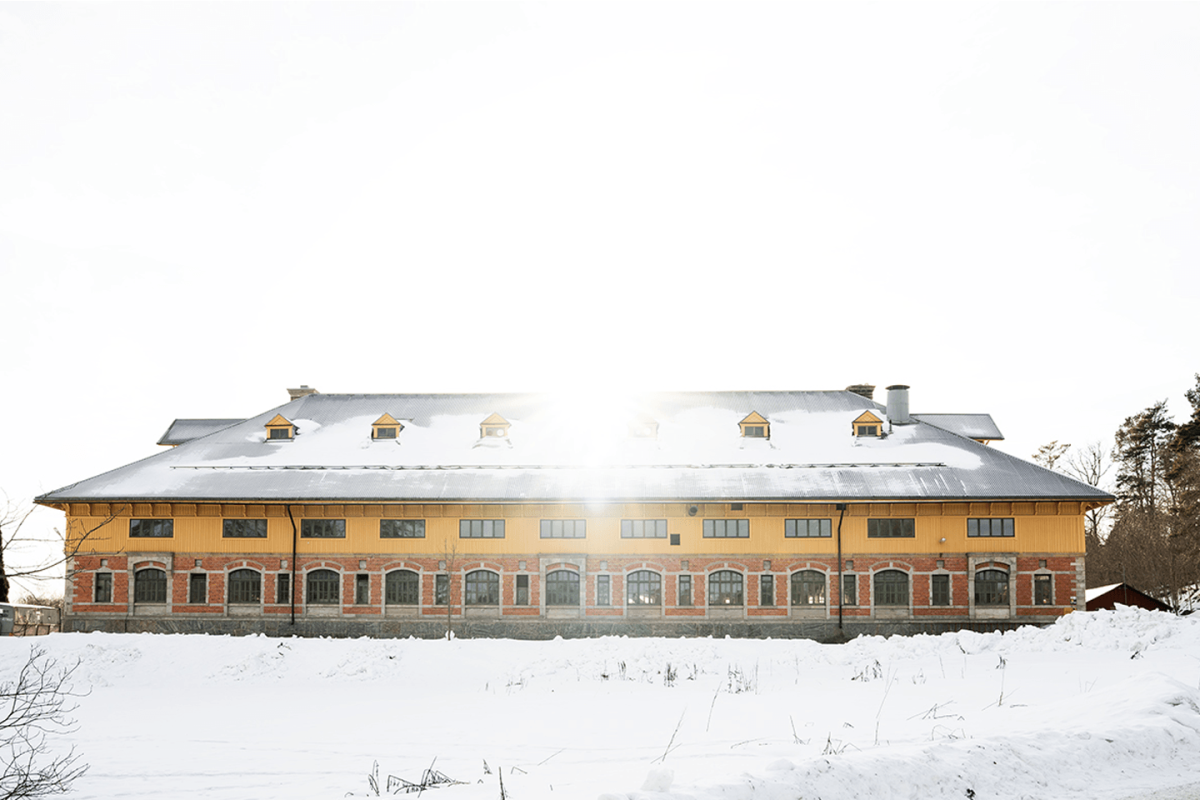
Epoken marks a new phase in the evolution of Art Lab Gnesta, an art(ist)run institution in rural Sweden shaped by a long-term, inquirydriven and siteresponsive practice. Over seventeen years, this work has approached art not as representation but as a generative force—treating place, organisation, and institution themselves as artistic material. The move to a former industrial site in Mölnbo, a beautiful place beyond repair, continues this trajectory: a response to questions that require new spatial, ecological, and institutional conditions, and part of an ongoing attempt to think and act beyond the Anthropocene. Founded in 2009 by artist Signe Johannessen and Erik Rören, who continue to lead its development, Epoken extends the organisation’s commitment to slow, collective processes and to engaging otherthanhuman realities as active participants in artistic production.
Sunday 27 September
At the Royal Institute of Art, Flaggmansvägen 1, Stockholm
9 am Welcome to the Third Day of the Annual Symposium
The final morning of the Research Annual offers new perspectives on our shared exploration of epochs and epochality. The session concludes with a dialogue with participants, followed by closing reflections and a summary by Mick Wilson. For more information about the speakers, please scroll down.
9.05 am Restless Infections - by Jay Pather
The presentation will draw from a recently published book edited by Pather, Restless Infections, based on Public Art in South Africa. Pather navigates underpinnings of the book: notions of the restless city, multiple publics, contested land, home and belonging, as well as the public artwork that he has curated for Cape Town, a city that remains largely untransformed and in the most economically unequal country in the world.
9:45 am Reading across Spiralling Times - by Valentina Desideri
Spinning planets turn around the Sun. Seen from Earth and through the “alternative time-keeping device” of Astrology, they provide an image of multiple epochs, planetary cycles perpetually unfolding, existing all at once. How can such a spatialized rendering of time, inflects our reading of current events? I would like to share some experiments that we have been developing with Denise Ferreira da Silva though our practice of Poethical Readings, where we read political events across time using astrology.
10.25 am Coffee Break
10:40 am ‘Frugality’s Futurity’ - by Tim Waterman
Frugality is not synonymous with austerity. It is, instead, a set of practices that bear fruit in the future through planning in the present and knowledge of the past. This talk presents frugality as a secular concept of grace and a utopian horizon that can help found collective practices for human and planetary flourishing.
11:20 am Dialogue with Symposium Participants
12.00-12.15 pm Closing reflections and a summary by Mick Wilson
12:15 – 13:15 pm Light lunch
Keynote
Friday 25 September
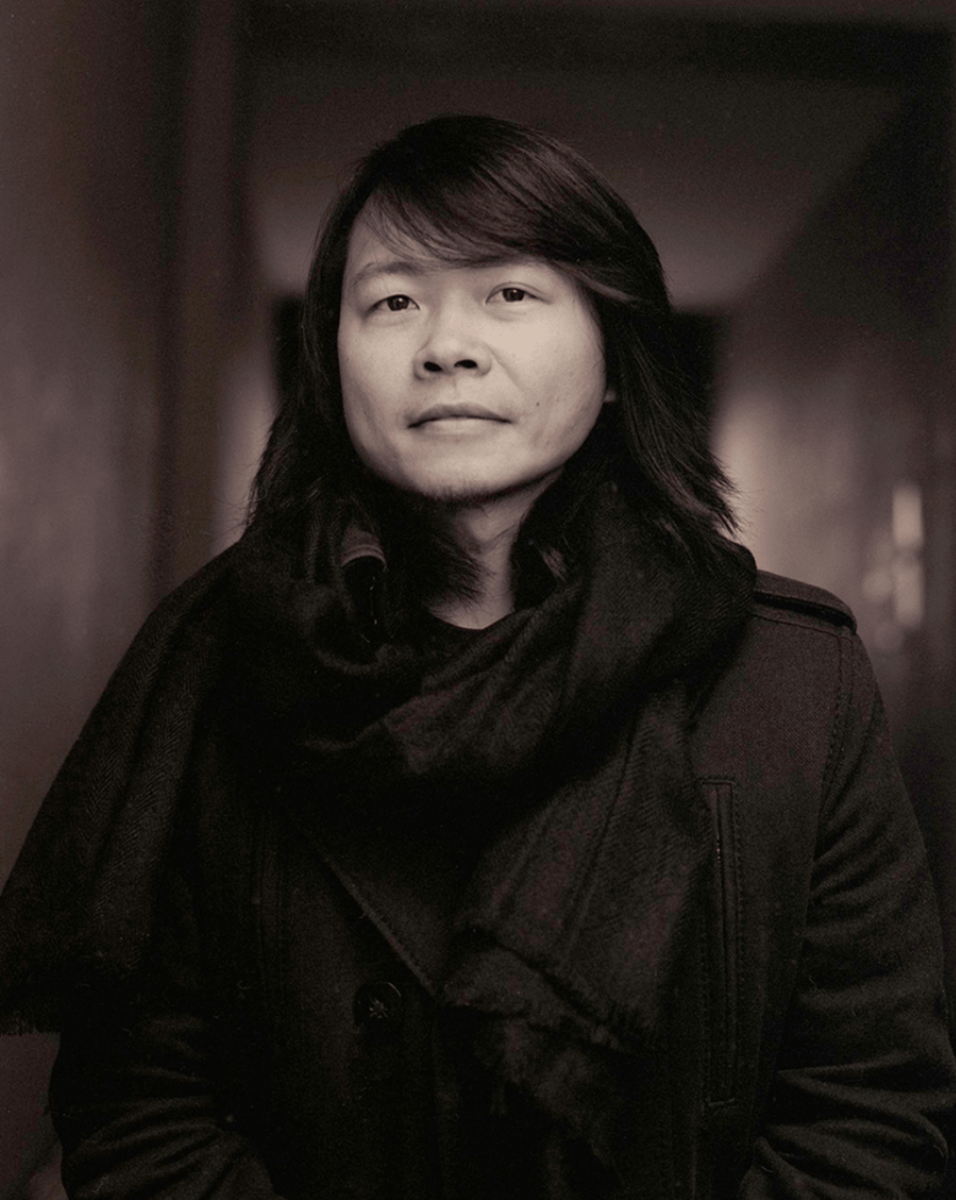
Yuk Hui is Professor of Philosophy at Erasmus University Rotterdam, where he holds the Chair of Human Conditions and directs the Erasmus Institute for Philosophy and Technology. He is the author of several monographs that have been translated into a dozen languages, including On the Existence of Digital Objects (2016), The Question Concerning Technology in China: An Essay in Cosmotechnics (2016), Recursivity and Contingency (2019), Art and Cosmotechnics (2021), Post-Europe (2024), Machine and Sovereignty (2024), and Kant Machine (2026). He is the convenor of the Research Network for Philosophy and Technology and has been a juror for the Berggruen Prize for Philosophy and Culture since 2020.
Discussant
Friday 25 September
Krystof Kasprzak received his PhD in philosophy in 2017 from Södertörn University. He is Associate Professor in the Theory of Practical Knowledge and affiliated with the Centre for Practical Knowledge. His work addresses questions of practice and experience, with a current focus on more-than-human relations and forms of life.
Speakers
Saturday September 26th, 9 am
Alice Chauchat (F) is a dance artist based in Berlin since 2001. Collaboration has been her recurring reality - the negotiation of distance, alterity and de-centering a growing concern in her work. Since 2014, Alice has been developing Togethering, a choreographic research on the ethics of intimacy across radical difference. Using dance to activate notions such as not knowing, approximation and tending towards, the project investigates the qualities of engagement they generate. Togethering produces scores, choreographic concepts, performances and texts, and unfolds in studios, on stage, in museums and in urban space.
Saturday September 26th, 9:45 am
Kerstin Bergendal, “In my art practice, I investigate a listening position. I work durationally, with departure from a given site, often undergoing some form of alteration. Thus, the site and its different local constituencies, professionals and institutions, eventually intervene in my work. For this reason, my art projects often grow into long, unpredictable, reciprocal ping-pong processes. I also tend to express my work artistically through specific forms of imagery—the model, the prototype, the strategy, the timeline.”
Saturday September 26th, 10:40 am
Kerry Guinan is an Irish conceptual artist working across a variety of media, including installation, performance, participatory art, and networked art, to critically reveal power relations in local and global systems. Her practice-based PhD at the Limerick School of Art and Design, the Technological University of Shannon Midwest, Ireland critically defined her artistic methodology of demystifying globalised systems of capitalist production, engaging the theoretical frameworks of Gothic Marxism, socially engaged art practice, and Brechtian theatre, among others.
Saturday September 26th, 11:20 am
Michele Masucci, is an artist, researcher and lecturer in writing and artistic research at the Royal Institute of Art. Masucci a PhD in Medical Science at Karolinska Institutet. They also include a Bachelor’s degree in Philosophy from Södertörn University and a Master in Fine Arts and Post Master in Art&Architecture from the Royal Institute of Art in Stockholm. Masucci is pursuing research entitled Territories of Imagination: “The Republic of Maschito”, which examines how artistic practices intersect with political movements. One focus is the 1943 revolt in Maschito, Italy, during which women led the resistance against fascism to briefly establish a partisan republic.
Sunday September 27th, 9 am
Jay Pather is a choreographer, multi-media artist, curator, writer, and teacher. He is Professor at the University of Cape Town where he directs the Institute for Creative Arts (ICA). He is curator for the Infecting the City Public Art Festival; the ICA Live Art Festival and the Afrovibes Festival (The Netherlands). Current projects include a Live Art Series called the earth still shakes at the Smithsonian National Museum for African Art in Washington DC.
Sunday September 27th, 9:45 am
Valentina Desideri is a junior researcher at CAPIm at the Royal Academy of the Arts. She is also an affiliated researcher with Critical Racial AntiColonial Studies (CRACS) Co-Lab at New York University and with the Centre for Theatre Studies at the Lisbon University (ULisboa). She holds a PhD in Race, Gender, Sexuality and Social Justice (University of British Columbia, Vancouver), a Master of Fine Art (Sandberg Institute, Amsterdam) and a Bachelor of Arts in Dance-Theatre (Laban, London). She is currently working on re-writing her doctoral dissertation “Studio Practice: Experiments in Objectless and Objectiveless Artmaking” for publication, as she continues to focus on study as a collaborative practice of political imagination.
Sunday September 27th, 10:40 am
Tim Waterman is Professor of Landscape Theory at the Bartlett School of Architecture, University College London. His research addresses imaginaries: moral, political, social, ecological, radical, and utopian. This forms the basis for explorations of power and democracy and their shaping of public space and public life, taste and manners, and foodways in community and civic life and landscape. He is the author of The Landscape of Utopia: Writings on Everyday Life, Taste, Democracy, and Design and editor of Landscape Citizenships with Ed Wall and Jane Wolff, Landscape and Agency: Critical Essays with Ed Wall, and the Routledge Handbook of Landscape and Food with Joshua Zeunert.
Registration
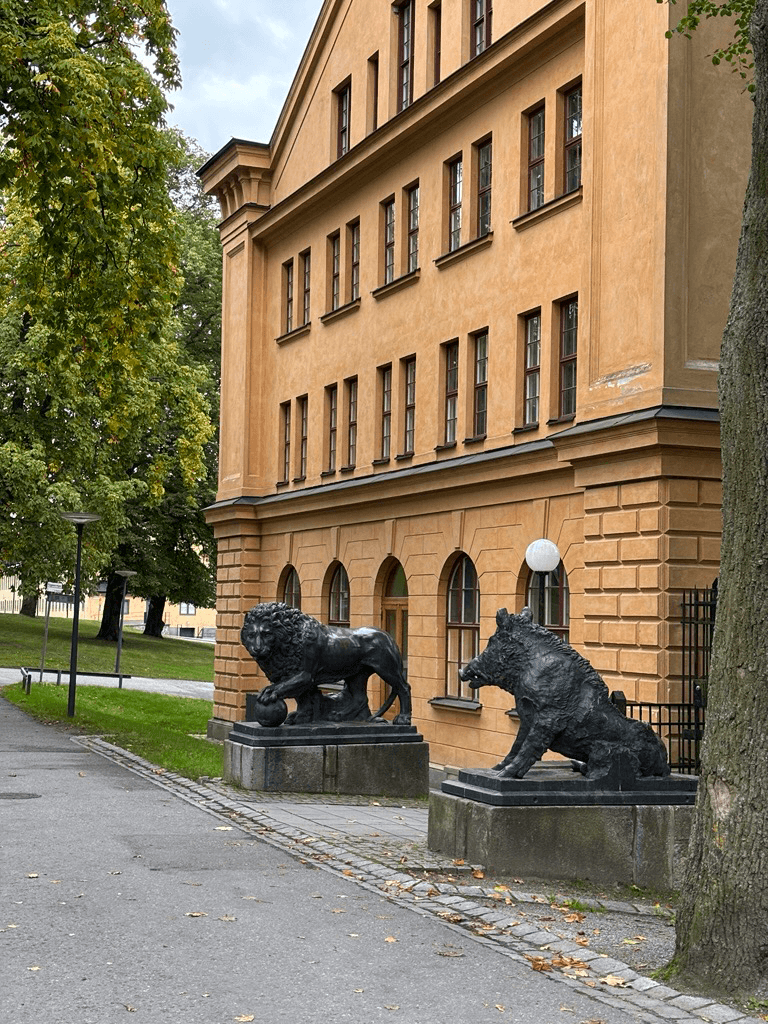
The CAPIm Research Annual is open to the public with various modalities of engagement across three days. In the registration form, we request that you select the relevant participation options.
On Friday, September 25, we welcome you to join us at the public launch event of the Second Annual Symposium with keynote contribution by Professor Yuk Hui at the Royal Institute of Art on Skeppsholmen in Stockholm.
On Saturday 26, and Sunday 27, September, we welcome you to facilitated engagements that pertain to the theme of epochality and its aesthetic and embodied practices. The programming will take place at the Royal Institute of Art and includes a half-day excursion to “Epoken” in Mölnbo.
Please register to assist us in making the necessary arrangements for these activities.