CAPIm Summer School “For a Justice to Come”, June 2025
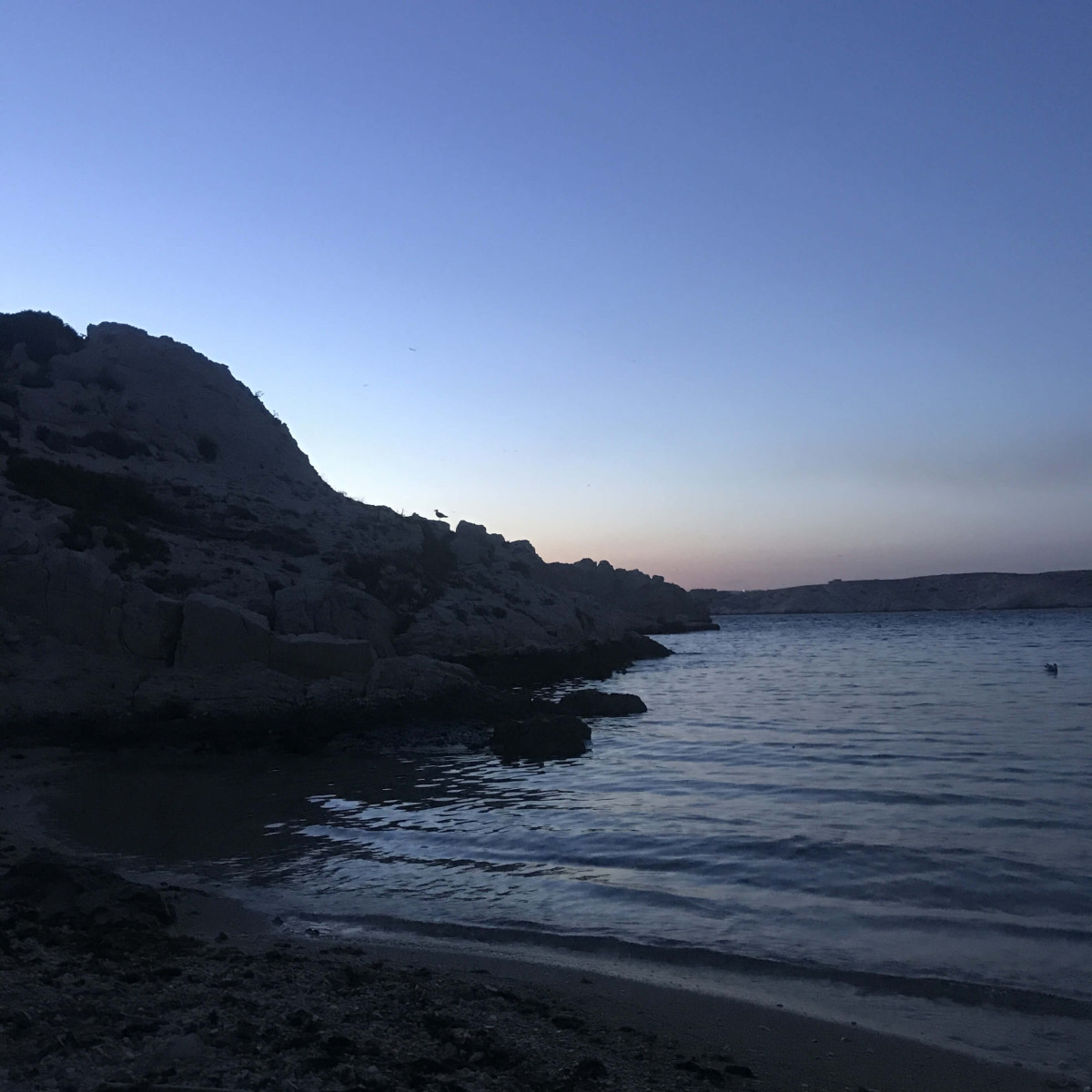
7 June - 16 June
Natasha Marie Llorens, Michele Masucci, Valentina Desideri
Artagon Marseille, 3 bis f
14-17:00, April 15 and 29, May 15, and June 5th
In 2025, the Center for Art the Political Imaginary inaugeral Summer School took Jacques Derrida’s notion,“For a Justice to Come,” as its point of departure. Derrida argued that justice must remain an idea that haunts and decenters the institutions that claim to arbitrate it, and the Summer School centered on the implications of this idea for artists, curators, designers, and others whose work engages with the aesthetics of imagination.
We focused specfically on a shift taking place in today’s political imaginary: the international response to the unfolding genocide in Gaza makes clear that there is a crisis in the notion of justice. A consensus among European countries forged in the wake of the Second World War governing war crimes has dissipated. Or, it might be more accurate to write that contradictions inherent in that fragile agreement about the universality of access to justice have been freshly revealed. This dissipation is not isolated: the rise of the extreme right-wing in places like India, Brazil, the United States, and throughout Europe marks a decisive shift not only in the political landscape, but in the structures that shape society’s collective imagination about the very nature of the term, justice.
Program
The inaugural Summer School was held in Marseille, which was a key transit point for those fleeing European fascism during the second World War. One of its most famous passers-through was Walter Benjamin, who left from Marseille for Spain overland before taking his own life in Port Bou. The School met in Marseille, traveled in Benjamin’s footsteps, then returned to Marseille to continue its curriculum. The location and journey are significant because Derrida defines his notion of justice-to-come against Benjamin’s understanding of justice. The School’s focus for 2025 is based in part on the artistic research of Anna Dasović, PhD candidate at HDK-Valand.
Four mandatory on-line sessions in April and May will set out the philosophical confrontation between Walter Benjamin and Derrida. These sessions allowed participants to take a role in shaping parts of the curriculum in June, as well as forge a common set of references to work both with and against during the summer intensive.
Monday 9 June
5–7 PM
Situated Justice: Walking Tour
With Natasha Marie Llorens
Marseille is a city that reveals itself very slowly, despite urgent dynamism in its streets and the impression it often gives passers-through of being multicultural and open. This walking tour will introduce participants of CAPIm’s 2025 summer school to the city through the prism of three historical landmarks, sites that are themselves conceived as portals or doorways—like the monument to Walter Benjamin towards which our work together over this week is directed. They are chosen for the way the reflect deep ties to French colonial violence, the violence of French nationalism internally, and to how they allude to a much broader sense of injustice in the modern nationalist project.
The Saint Charles central train station was built between 1893 and 1896, but its celebrated staircase connecting it to the city was initiated in 1911 and finished after delays due to the First World War in 1927. The walk will consider the effect today of this spatial introduction to the city of Marseille together with the way such a bridge represents both provincial agricultural wealth and colonial possession in sculptural form.
The Porte d’Aix was inaugurated almost a century before the train station’s stairs in 1839 to commemorate French victories at the Battle of Trocadero in 1823. It marks the location of a much older history, and a cyclical attempt to bring regimented order to a city infamous for its ungovernability—Louis XIV’s troops blasted a hole in the 13th century ramparts of the city at this spot in 1660. The walk will consider the monument in the context of recent attempts to gentrify the city and reign in its considerable and diverse immigrant communities.
Inaugurated the same day in 1927 as the stairs integrating the train station into Marseille, the Monument aux Héros de l’Armée de l’Orient et des terres lointaines commemorates those who died in French military service in the Balkans, at the Dardanelles and in all colonial theatres of war during the First World War. The site has been amended over the century since its erection with other symbolic representations of those fall “elsewhere” on behalf of “France.” The walk will interrogate the conflicts materialized at this site as inherently entangled colonialism.
Tuesday 10 June
2–5 PM @ Artagon
Entrer en Pédagogie Antiraciste
With Lydia Amarouche (Shed Publishing, Marseille)
This workshop invites participants to take part in a collective reading (arpentage) an excerpt of the book Entrer en Pédagogie Antiraciste (Entering antiracist pedagogy), written by the union Sud éducation 93 and published by Shed Publishing in 2023. Arpentage is a reading practice rooted in trade union and popular education traditions, designed to foster shared learning and political engagement through collective analysis.
Inspired by the pedagogical legacies of bell hooks, Amílcar Cabral, and Paulo Freire, Entrer en Pédagogie Antiraciste offers tools, reflections, and strategies for building liberatory educational practices. The workshop will also be an opportunity to engage with the work of Shed Publishing, an anti-colonial publishing house based in Marseille, and its commitment to diasporic, decolonial, and community-based approaches to knowledge production.
In resonance with the themes of the summer school which interrogates the shifting meaning of justice in the face of global authoritarianism and historical denial, this workshop foregrounds education as a site of both resistance and imagination. No prior knowledge of the book is required, readings (in English translation) will be provided and read together during the session.
Wednesday 13 June
10 AM–4 PM @ 3bisf
Itching the Garden + Gardening
With Liv Bugge and 3bisf staff
A chair is tilted against the wall again and again, carving the story of bodies hidden here. An internal combustion engine breathes out and releases a restless spirit. The smell of a tree wakes up a middle-aged 3-year-old.
The ancient greek word “ἅπτομαι (haptomai)”, meaning touch, is a multidirectional verb meaning both to touch and being touched at the same time. The “-omai” ending indicates that action takes place in a middle voice. In Ancient Greek, the middle voice is used to bridge between active and passive voices, where the active voice shows the subject performing the action, and the passive voice shows the subject being acted upon. Liv Bugge prompts participants to engage in this middle voice from several perspectives. Departing from both bodily and personal experience, participants will map out a common landscape of stories of connection, disconnection, healing and haunting through chemical, emotional or sensorial traces in the space of 3 bis f. The workshop build on Bugge’s engagement with sensory play as methodology to experience that which is usually kept out of public view.
3 bis f in a venue for the development of both the performing and the visual arts that has been located inside the Montperrin Psychiatric Hospital Center since 1983. It hosts several residents a year for anywhere bewteen a few weeks to several months. “3 bis f” the name given the building when Montperrin was founded at the end of the 19th century. Until 1982, 3 bis f functioned as the women’s ward: it was a closed hospital facility designed specifically for this purpose with panacoustic architecture, dormitories, and cells. In the early 1980s, physchiatry underwent a disciplinary transformation and began to develop a more open methodology. The art space 3 bis f project was initiated by a mixed team of hospital staff and artists when parts of the hospital were closed down and left empty. Their ambition was to maintain the facility without excluding the hospital community in which it remained grounded. The team was also interested in the risk involved in hosting non-specialists in psychiatry, and in the presense of artists’ production in the newly vacated spaces of the hospital. In the early 1990s, the hospital financed a renovation project, which added a performance hall and an exhibition space to the building. 3 bis f has evolved into a substantial creative tool for artists from the visual and performing arts, with a events hall and an exhibition space, or a black box and a “white cube.”
Thursday 12 June
10 AM–12 PM at Moho
La Tribune
With Elise Courcol Rozès
Elise Courcol Rozès’s presentation will focus on both institutional justice and its alternatives. Courcol Rozès will first introduce her analysis of courthouse architecture based on her artistic research project « La Tribune ». The project emerges from experience shared with people involved in the French legal system. Then she will present the “Yaka” workshop, which was conducted with prisoners in île-de-France. The workshop asks what design can tell us about everyday subversive acts or “détournements” in prison. The artist will conclude with ethnographic research on the European movement for restorative justice and an open discussion on what could replace institutional justice.
Thursday 12 June
4–6 PM @ Artagon
Poethical Readings
With Valentina Desideri and Denise Ferreira da Silva
In their collaborative practice, Valentina and Denise experiment with ‘reading tools’ inspired by well-known and newly designed practices–such as the Tarot, Political Therapy, Palmistry, Fake Therapy as well as Reiki, Astrology, and Philosophy.
What if, instead of providing a resolution, a direct answer, or a definite interpretation, a reading helped us to navigate the complexity of existence, attending to both its actual and virtual moments, its many possible positionings, deep connections, and unexpected layerings?
Rehearsing the kind of knowing Walter Benjamin calls ‘intuitive faculty’ and Carl G. Jung names ‘creative thinking’, they view reading as imaging. In their practice, reading takes the form of an assembling that exposes and navigates the complexity of a situation, event, or problem that concerns a person or collective at a given moment and place. While performing this type of ‘poethical’ reading, they aim at expanding the horizon of thinking, opening the range of possibilities, unsettling unquestioned realities, and allowing for other kinds of questions to guide existence.
Every reading exposes possibilities, reveals blockages, and shifts perspectives. Beyond the principles of non-contradiction and identity, ‘poethical’ readings redesign any given situation in a way that allows for multiple articulations of situations and events to coexist without the imposition of a single meaning or direction.
Friday 13 – Saturday 14 June
Marseille – Port Bou – Marseille
Walking with Benjamin: Fieldnotes Toward Passage
With Anna Dasović
“Justice is the principle of all divine end-making, power the principle of all mythic law-making.”
— Walter Benjamin in Critique of Violence, trans. Edmund Jephcott
A two-day workshop that consisted of two parts.
Day one was a train trip and then an encounter with the memorial for Walter Benjamin, designed by Dani Karavan, which is composed of several key elements that are scattered across the site and invite a circular movement through them, each offering a distinct spatial experience.
Day two was a walk along the final route taken by Walter Benjamin in September 1940, from Banyuls-sur-Mer in France across the Pyrenees to Portbou in Spain, but in reverse. The route is historically a journey of exile, escape, and irreversible historical weight. Participants engaged in a multi-sensory practice of fieldnote-taking inspired by Benjamin’s own writings: fragments, impressions, gestures, and silences that resist simple narrative. This was not a reenactment. It wass a walk of attention, presence, and interruption — one that traces how landscapes carry histories, and how we might record what is seen, heard, felt, sensed, and absent.
Framework
When we speak of the right to exit, the right to enter, or the right to return, we are not simply naming logistical or bureaucratic obstacles, we are speaking of moral and historical ruptures. The denial of these rights is not just tragic, it is unjust. Benjamin believed that much of what we call ‘justice’ is actually mythic violence — the violence of states, of borders, of laws that claim to protect, but really dominate.
Benjamin draws a radical distinction between law-making violence (which imposes order, often by force) and divine violence (a form of justice that breaks the cycle of domination). He is especially suspicious of how states legitimize violence in the name of “justice” — for example, how borders are defended by legal force, or how police power becomes normalized to name some examples. He imagined a different kind of justice — not one tied to revenge or law, but one that breaks cycles of domination entirely. When we talk about the right to exit, to return, to enter — we are not only asking questions about permission from the law.
This contrast — between power (which sustains legal systems) and justice (which breaks into those systems from outside) — allows you to frame the denial of the right to exit, return, and enter as not simply policy failures, but as forms of mythic violence, violence that maintains the unjust status quo under the guise of legality.
In , the Summer School will be structured by four practice-oriented nodes: one defined by CAPIm’s 2025 visiting Senior Researcher Liv Bugge in line with her artistic practice; another examining the question of from where/whom justice to come might be claimed in conjunction with a visit to 3 bis f; a third devoted to Valentina Desideri and Denise Ferreira da Silva’s practice of ‘Poethical Reading’; and a final node led by Anna Dasović will journey to Port Bou in Walter Benjamin’s honor and explore notions of “field notes.