Introduction to Contemporary Arts and Politics, Summer 2026
9 June - 28 August
Seda Yildiz, Dr. Kerry Guinan, Dr. Michele Masucci and Prof. Mick Wilson
Online course with optional in person meet-ups
Summary
This is a distance course, with optional in-person meet-ups, introducing key political themes and questions in contemporary art practices, theories and institutions. The course is delivered in English, blended (i.e., delivered online with the option to meet face-to-face) and free to EU nationals.
It runs from 8 Jun 2026 to 30 Aug 2026 and the application period is between 17 Feb -17 Mar 2026. Applications are made via www.universityadmissions.se (for international applicants) and via www.antagning.se (for Swedish applicants).
Approach
This summer course has been conceived as an introductory course that addresses how contemporary arts (includes visual arts photography, film, and literature) interact or otherwise connect with the question of political imaginaries.
The student is introduced to key themes through the study of concrete examples. The course adopts an inquiry-based approach. By considering a range of situations where questions of art and questions of politics intersect, we seek to gradually build a wider model or structural account of relations between these. The course is therefore not premised on a pre-resolved theory of “art and politics”. Instead, it provides a survey of instances where themes and questions of politics and the political, and of art and the aesthetic, intersect. Among the concepts tested in this inquiry-based approach is that of the political imaginary. However, as an associated initiative of CAPIm the course is driven by an open research agenda, rather than a resolved theoretical position.
Topics covered in the course have included: competing accounts of the political/politics; different readings of the emergence of the aesthetic within colonial-modernity; the nature of exhibition; the geopolitics of the art world’s globalism(s); feminism and questions of eurocentrism; ecological practices and climate change responses; the nature/meaning of the construct”the political imaginary”; the shift from institutional critique to infrastructural activism; the tensions between “politics of representation” and “post-representational” practices; the question of the subject; modes of collectivity; and many other such themes. We introduce many themes and provide information and resources for participants to pursue further independent study on those themes that are of most interest for each.
The course interrogates the different claims for contemporary art’s political agency and political saliency, rather than accepting these at face value. Acknowledging the complex field of theoretical, critical and activist positions that operate in the interaction and conjunction of practices of art and practices of the political, the course does not claim to be comprehensive. However, it does seek to achieve breadth in the range of instances studied, including the use of examples that are recommended from the student participants themselves.
The course is also closely informed by the work of the platforms: L’Internationale Online, PARSE Journal of Artistic Research, and partnerships with among others VECTOR Studio, Iasi and
Dates and Locations
The optional in-person meet-ups will take place in:
(1) Gothenburg, Sweden (24-26 June)
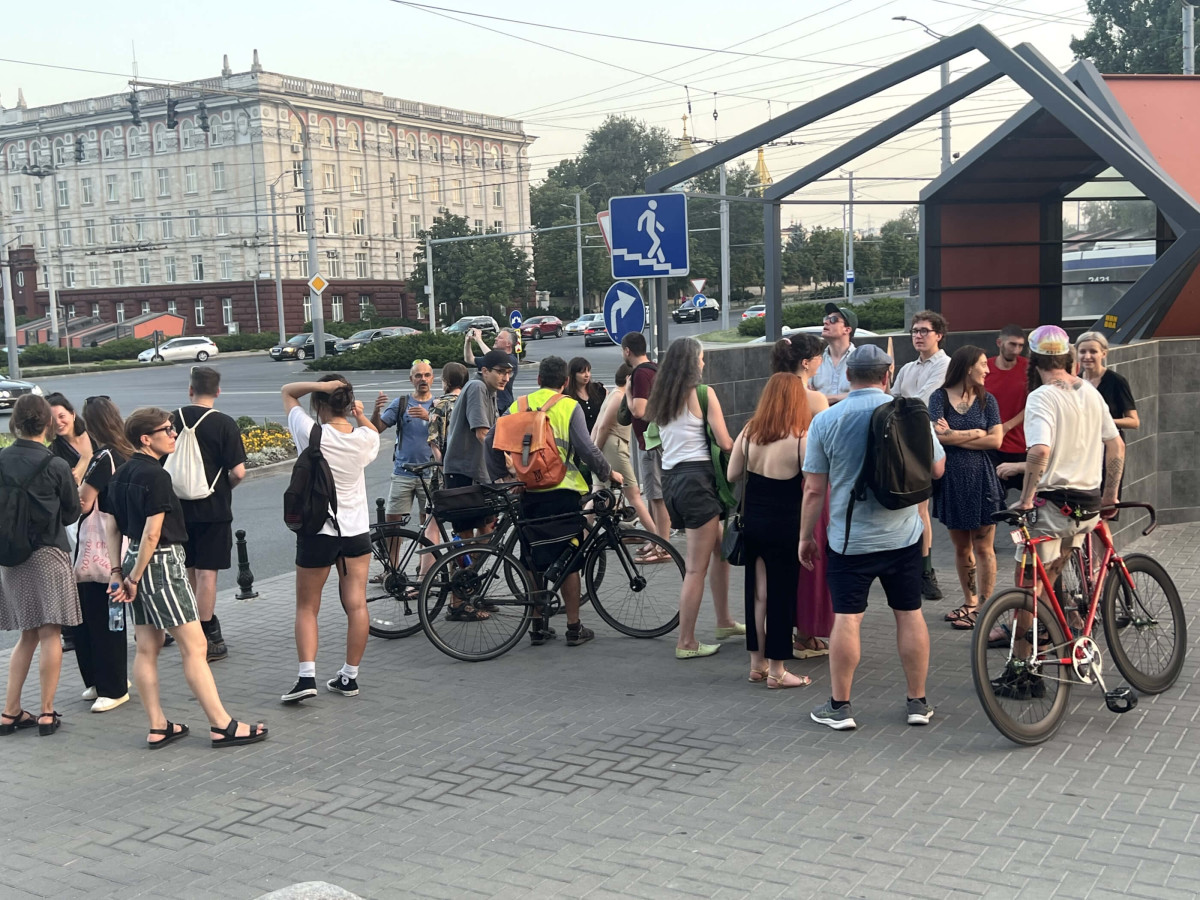
(2) Chișinău, Moldova and Iași, Romania (22-27 July)
Scroll down to see the complete schedule at the bottom of this page.
Practicalities
Please note that you will require stable internet access and headphones with mic. This is very important as poor connection, and lack of external mic and headphones, impacts the quality of the online sessions for all participants. Presentations will typically be recorded and posted online for students to access during the course.
Participation in the course means that your contributions to discussion in response to the formal presentations may be recorded for this purpose. The formal presentations can be attended live and also accessed via recordings published online, at whatever time suits your personal timetable needs. However, it is strongly recommended that you attend the ‘live’ online discussion sessions, and giest presentations, as these will not always be recorded. Attending ‘live’ offers the best opportunity to interact with the other participants on the course.
Conditions for Participation
No fees for EU and EEA citizens, Swedish residence permit holders and exchange students. Students are responsible for organising their own travel and accommodation and for their own costs attending workshops, and for their own costs of attending any intensive workshop. We welcome PhD researchers from anywhere in the world, who can apply to audit the course for free as a guest researcher at HDK-Valand’s doctoral programme in artistic practices. Please contact Prof. Mick Wilson with “guest PhD researcher request” in the message header.
Application Procedure
Admission is based on a letter of intention in English stating why you wish to attend the course and an updated CV. The course will be open for application from16 February to 16 March 2026. See the HDK-Valand website for educational courses.
Guest speakers
In previous years speakers at collaborative events have included: Oda Projesi (Özge Açıkkol, Güneş Savaş and Seçil Yersel) (2025), the Office for Joint Administrative Intelligence (Chris Dreier and Gary Farrelly) (2025), Tranzit.ro/iași (Livia Pancu and Florin Bobu) (2025), Linda Thompson (Mid Sweden University) (2025), Cătălin Gheorghe (2021), Rena Rädle & Vladan Jeremić (2021), Vladimir Us (2021), Vasyl Cherepanyn (2021), Paul O’Neill (2020), Anselm Franke (2020), Steven Henry Madoff (2020), QAYYEM (2020), Haseeb Ahmed (2019), Georgina Jackson (2019), Kathrin Böhm (London, 2018), Prem Krishnamurthy & Emily Smith (Berlin, 2018), Bonaventure Soh Bejeng Ndikung (Berlin, 2018), and Paul B. Preciado (Berlin, 2018).
Schedule (CET)
This is the draft schedule for 2026 and subject to minor adjustments.
Tuesday, 9 June, 15:30-18:00
Wednesday, 10 June, 14:00-18:00
Thursday, 11 Jun, 15:30-18:00
Tuesday, 16 June, 15:30-18:00
Wednesday, 17 June, 15:30-18:00
Gothenburg Intensive
Wednesday, 24 June, 14:00-18:30 (Blended event, in person Gothenburg Intensive)
Thursday, 25 June, 10:00-18:00 (in person Gothenburg Intensive)
Friday, 26 June, 10:00-16:00 (in person Gothenburg Intensive)
Monday, 29 June, 15:30-18:00
Tuesday, 30 June, 15:30-18:00
Wednesday 1 July, 15:30-18:00
Break. No Meetings: Thursday 2 July to Tuesday 21 July
Work on the visual essay assignment
Chișinău and Iași and Intensive
“Imagined Organizations: Practices of Artistic Research Moving Across Semiperipheries”
Wednesday 22 July Chișinău and Iași and Intensive
Thursday 23 July Chișinău and Iași and Intensive
Friday 24 July Chișinău and Iași and Intensive
Saturday 25 July Chișinău and Iași and Intensive
Sunday 26 July Chișinău and Iași and Intensive
Monday 27 July Chișinău and Iași and Intensive
Break. No Meetings: Tuesday 28 July to Monday 10 August
Work on the visual essay assignment
Tuesday 11 August 15:30-18:00
Thursday 13 August 15:30-18:00
Tuesday 18 August 15:30-18:00
Thursday 20 August 15:30-18:00
Tuesday 25 August 15:30-18:00
Wednesday 26 August 15:30-18:00
Thursday 27 August 15:30-18:00
Related courses associated with CAPIm
This course is one of a series at Bachelor, Master and Doctoral level in a wider portfolio of courses associated with the Centre for Art and the Political Imaginary, that includes.
Introduction to Contemporary Arts and Politics, Bachelor Level. Summer 2026.
On Friendship and the Political Imaginary, Masters Level. Autumn 2026.
Commissioning and Curating Contemporary Public Art, Masters Level. Spring 2027.
Writing Research / Researching Writing, Doctoral level. Autumn 2026.
On Research Method and Research Design, Doctoral level. Spring 2027
Researching Imaginaries, Doctoral level. Spring 2028.
These courses are typically blended (i.e., delivered online with the option to meet face-to-face). They are free to EU nationals, delivered in English. Each course is rooted in live research currently underway at HDK-Valand Academy of Art and Design. It is also possible to audit one or more of these courses by becoming a guest doctoral researcher at one or other of the partner institutions in CAPIm. For more about the guest doctoral reseracher possibility, please contact: doctoral-education@hdk-valand.gu.se.