The Figure of the Archive: Research Seminar #2
2 March at 3pm - 6pm
Mick Wilson
HDK-Valand in Gothenburg and online
Participation is free, but booking required: Book Here
The goal of this series is to consider the figure of the archive as it functions in a range of current artistic research projects and the different political readings of this figure within these research undertakings.
(RE)FIGURE
The word figure enfolds multiple meanings - as a verb: to appear, be mentioned, represent, be a symbol of, imagine, pat-tern, calculate, understand, determine, consider - all remultiplied by the word’s hospitality to prefixes. Almost as complex… is the word ‘archive’ (the noun), which plays (is played) as idea, as institution, accumulation of physical or virtual objects, profession, process, service. Conjoining chese words ‘figure’ and ‘archive’ is to open up a cornucopia of meaning. (“Introduction” C. Hamilton et al. REFIGURING the ARCHIVE, Capetown: New Africa Books. 2002.)
The archive has been a central figure and pre-occupation over several decades for both the organizational infrastructure and the practical production of contemporary art. Indeed, it might be argued that the archive has become the enabling and the limiting horizon of many cultural practices. It often seems that all forms of collection, all forms of memory work, and all forms of programme are only conceivable through some appeal to the figure of the archive.
Even the desire for alternative cultural politics, including decolonized and counter hegemonic practices, seem to predicate themselves on alternative archival models and archiving otherwise. See for example:
“Instituting from archives: Asociación de Arte Útil and TEOR/éTica in conversation”
“Another Mapping of Art and Politics. The Archive Policies of Red Conceptualismos del Sur”
In this online workshop we will explore the reasons for this ascendancy of the figure of the archive, the different ways in which it has been experimentally re-constructed, and the wider contexts of current archival impulses across contemporary artistic practice and research.
Programme
15:00-15:30 Introduction Prof. Mick Wilson
15:25-16:00 “The Living Archives of Rural WWII Sites” Monika Gabriela Dorniak
16:00-16:10 Short break
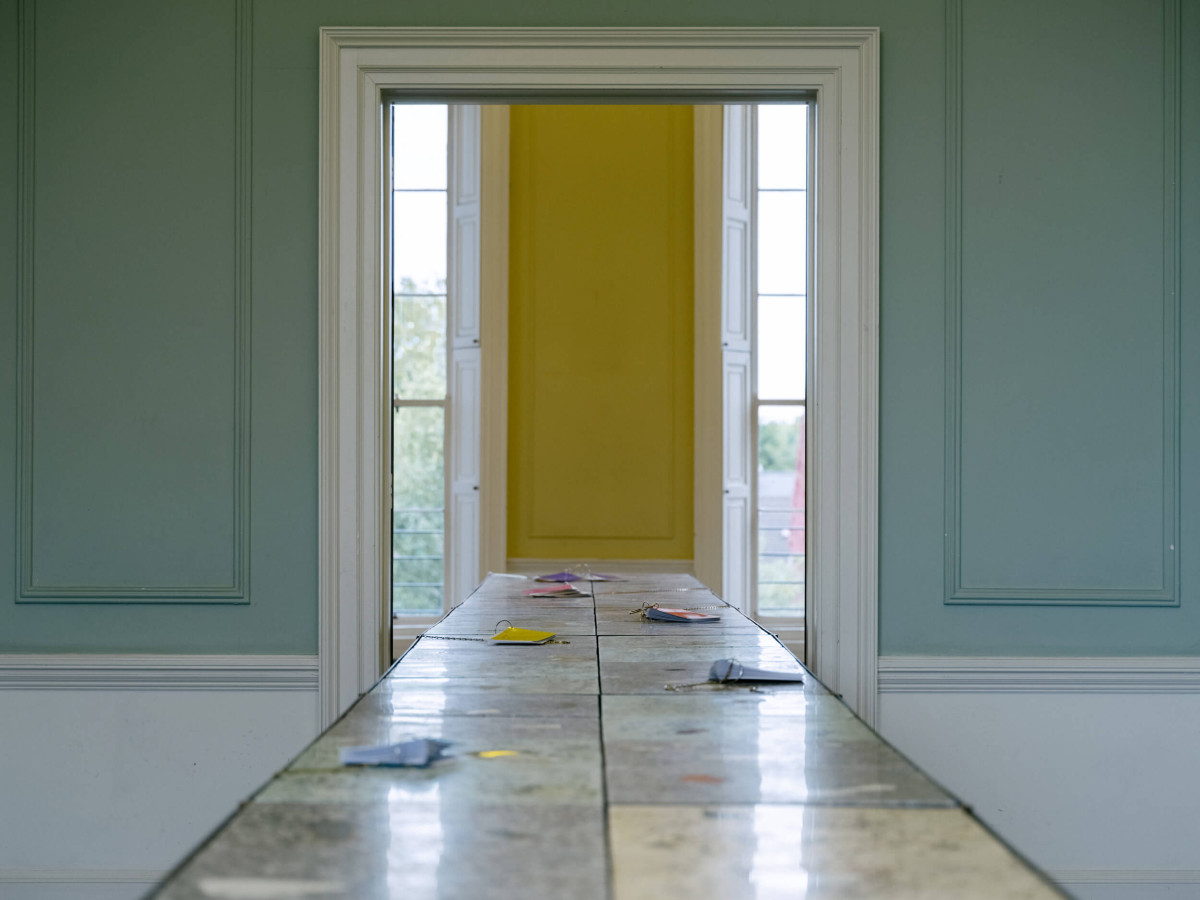
16:10-16:45 “Indentation: Placing a table in the Irish Architectural Archive” Dr. Fiona Hallinan
16:45-16:55 Short break
16:55-17:55 “Archival Configurations: Mediations and Performative Images” Prof. Jyoti Mistry
17:55-18:00 Closing and advance information on next seminar in the series.
About the topics
“The Living Archives of Rural WWII Sites” is a reflection from an artistic research project that interrogates the entangled agencies of soils, plants, and animals in rural landscapes, in particular forests, marked by the violence of the Second World War, opening the field of memory studies to interspecies perspectives and vernacular archives. Drawing from multi-generational accounts within German and Polish communities, whose connection to land is lived and embodied rather than symbolic, this work reveals rural environments as porous sites where traumatic interruptions persist in everyday practices. Bomb fragments in trees and the unearthing of live ordnance amidst agricultural labour become gestures of memory, underscoring the land’s capacity to both conceal and reveal histories that institutional discourses often silence. Through auto-ethnographical, agricultural, and collaborative artistic practices, this research demonstrates how rural vernacular archives, charged with silences and spectral presences, actively constitute incomplete and evolving narratives of post-war Europe. It is within these terrains that the distinction between ruin and restoration collapses, inviting new methodologies for reading matter as active participant, witness, and agent in processes of cultural remembrance.
“Indentation: Placing a table in the Irish Architectural Archive” departs from the exhibition Buildings End staged by the Department of Ultimology at the Irish Architectural Archive from September to October 2023. It took the subject of architecture that is at risk of demolition or degradation to create a space of attention for this phenomenon. The centrepiece of the exhibition space was a major sculptural installation, Fragment Meditation by Hallinan. Comprising a table made of steel and concrete running through the space, it was a physical record of a building no longer existing – the Church of the Annunciation, Finglas West, Dublin, built in 1967 and demolished in 2021. The sculpture was made by incorporating rubble from the church into the fabric of the newly constituted concrete slabs, echoing both the material of the original building and its functionality. In the drafting room visitors were presented with Hallinan’s artwork framing collated fragments of Rowley’s research on architecture and ultimology, including case studies of buildings and material from the Irish Architectural Archive and other sources.
“Archival Configurations: Mediations and Performative Images” Rather than a presentation of proposed methods and prescripts, this contribution draws from various propositions of archive as place (institution), as practice (process) and its contextual significance for figuring out possibilities: meanings, events and experiences. Using examples from several different research enquiries and its attendant creative projects, the contribution invites discussion on the role of images in the archive beyond their evidentiary function.
About the speakers
Monika Gabriela Dorniak (PhD Candidate) is an artist, educator and researcher whose anti-disciplinary practice traverses the boundaries between bodies, objects, and environments through performance, textile sculpture, and multimedia interventions. Her work unfolds within collaborative frameworks, mapping the shifting terrains of inherited and embodied memory. Dorniak’s exhibitions span institutions including the National Gallery Vilnius, Tate Modern London, Galeria Promocyjna Warsaw, and KINDL Berlin. In 2024, she began a practice-based PhD at HfK Bremen and HDK Valand Gothenburg, exploring the reverberations of the Second World War within rural, multispecies environments through auto-ethnographical and agricultural lenses.
Fiona Hallinan (PhD) is an artist, researcher and filmmaker based between Brussels and Cork. She is co-founder of the Department of Ultimology, a collaborative research practice for paying attention to endings (encompassing that which is passing into irrelevance or redundancy or the extinction of material and immaterial entities), which was the subject of her doctoral project at LUCA School of Arts, KU Leuven, where she currently teaches. Her work is informed by a practice of oral interview and collective reading groups that explore modes of attending to death, and instigating multi-form projects and events aroundendings, such as the closure of a canteen, the demolition of a church, or the extinction of a plant. In this way hospitality, including the organisation of gatherings and food, thresholds and traces are central to her work. She has exhibited internationally including at IMMA, Ireland and Kunsthal Gent, Belgium and her film Making Dust is held in the Arts Council of Ireland Collection
Jyoti Mistry (PhD) is Professor in Film at HDK-Valand at University of Gothenburg. She works with film as a research form and mode of artistic practice. She has made critically acclaimed films in multiple genres, and her installation work draws from cinematic traditions but is often re-contextualized for galleries and museums that are outside of the linear cinematic experience. Most recent: we come in peace, they said (2024) featured at Vienna Shorts, Loving in Between (2023) premiered at Locarno International Film Festival and Cause of Death (2020) premiered at Berlinale International Film Festival. Her current research focus is on indigeneity and Sámi experiences in Sweden’s colonial history. Recent publications: “Three procedures for unarchiving” Found Footage 10th Anniversary Issue (ed) by César Ustarroz (2025), “i/eye in the archive: a chance discovery of love” Special issue 42 Kolik Film (2024), International Journal of Film and Media Arts: “Transversal Entanglement - Artistic Research in Film” (2022) and a special issue of Film Education Journal “Decolonising Film Education” (June 2022). From 2021-2024 she was editor-in-chief of PARSE (Platform of Artistic Research in Sweden). In 2016, she received the CILECT Teaching Award for innovation in film research and pedagogy. She has supervised and examined numerous creative arts PhDs. From September 2024 to September 2025, Mistry was Leverhulme Visiting Professor at SOAS (University of London) and from April-June 2026 will be a Senior Fellow at the Collegium Helveticum in Zurich.
Context: Thinking through the figure of the archive
In taking the imaginary as an object of analysis, the term figure becomes a key term. Figure is used to indicate the clustering of a set of images, narrative elements, motifs and constellations of idea/image/story fragments that while not settling into the categorical fixity of a concept, nonetheless operate as a recognizably consistent element—with multiple variants —across texts, sites, and utterances. Figure is a term originally produced within rhetorical analysis, however, it has evolved with psychoanalytical and other ways of thinking about meaning-making in the 20th C.
The archive is a potent figure in contemporary cultural practice, one that arguably has achieved a certain hyper-currency since the 1970s and especially from the 1990s onward in artistic discourse. Adina Arvatu in “Spectres of Freud: The Figure of the Archive in Derrida and Foucault”, citing Pierre Nora has noted that the “figure of the archive has immense cultural and methodological significance in what we, in our posthuman(ist) age, still call ‘humanities’: Foucault and Derrida … contributed largely to this significance. They thematized the ‘archive’ (in the singular) and endowed it with an unmistakable (yet often misunderstood) figurality.” In this series we focus not on the humanities per se but rather we consider some of the different ways in which the archive functions as a figure within specific artistic research projects.
In approaching the archive as a figure, we are drawing upon a wide range of recent approaches to figuration, such as that outlined by Donna Haraway in a recent interview “Anthropocene, Capitalocene, Chthulhucene: Donna Haraway in conversation with Martha Kenney” (2023), where she described how: “Figuring” as “a way of thinking or cogitating or meditating or hanging out with ideas. I’m interested in how figures help us avoid the deadly fantasy of the literal. Of course, the literal is another trope, but we’re going to hold the literal still for a minute, as the trope of no trope. Figures help us avoid the fantasy of ‘the one true meaning’. They are simultaneously visual and narrative as well as mathematical. They are very sensual.”
In the introduction to the (2022) open access volume Figure: Concept and Method the editors aim:
“to address how figures, figuring and configuration provide a way to study complex, contemporary problems and processes that require interdisciplinary approaches. We outline how individual contributions make use of figures, figuring and configuration. We demonstrate what is at stake in the analysis of figures, the practice of figuring, and the compositions of configuration. […] Long into the medieval period, figura signified ways of knowing that connected signs to material and historical life. […] Although Auerbach did not intend his methods to be either sociological or political, thinking with figures has accompanied a variety of approaches in the social sciences, the humanities and political practice. For example, Georg Simmel’s sociology used the figures of the stranger, the poor and the adventurer to illustrate a more general condition, whereby ‘each person is called to realize his own, his very own prototype”
Dates and Locations
Monday, 2 March 2026, 15:00–18:00
PhD Seminar Room, Vasagatan 50, Gothenburg, and via Zoom
Conditions for Participation
Participation is free. Booking required (Book Here). No ECTS credits will be awarded. Certificate of attendance can be issued if requested.
Application Procedure
Places provided on a first come / first served basis.