On Research Methods and Research Design (Spring 2027)
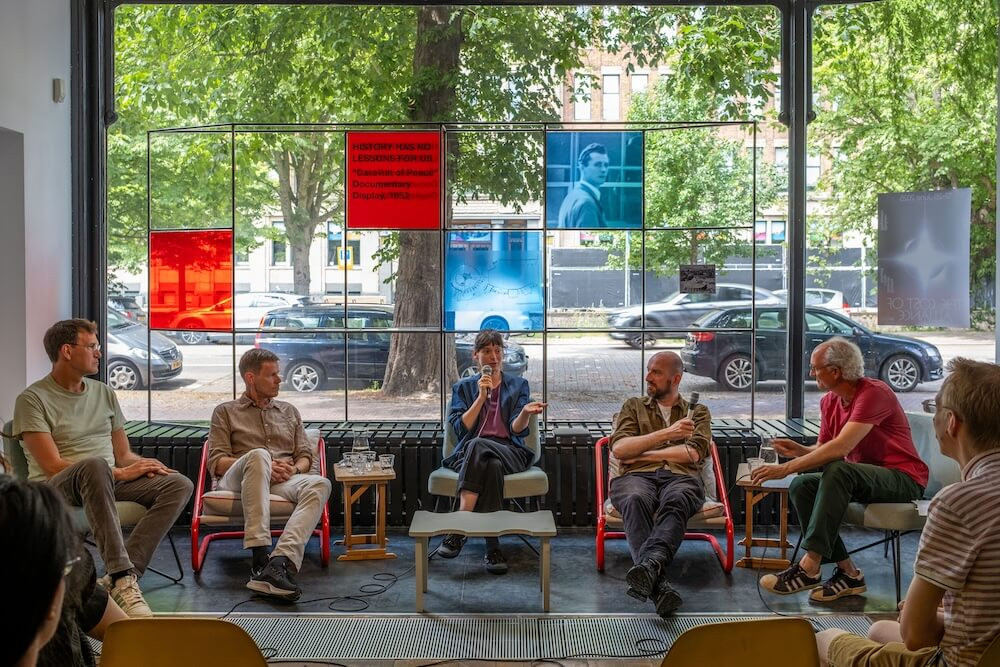
Vladislav Shapovalov (PhD candidate NABA & HDK-Valand), History Has No Lessons For Us, 2025. Stroom Den Haag, The Hague. Courtesy the artist. Photo: Dana La Monda
1 February 2027 - 15 June 2027
Prof. Mick Wilson, Jason E. Bowman, Dr. Kerry Guinan, Dr. Michele Masucci and guests
HDK-Valand, Gothenburg and Online
7,5
15 October - 15 November 2026 Apply Here
About the Course
This is a doctoral level course that provides an introduction to questions of research method, research methodology and research design specifically constructed to support early stage researchers in artistic subjects ranging from craft, design, fine art through to performing arts and music composition. While doctoral education in most disciplines entails some form of methodological training, this is an especially tricky and contested area of teaching and learning in artistic research.
This course commences by inviting participants to explore the difference between: (i) talking about how something is done; (ii) talking about why it’s done one way and not another way; (iii) talking about how something is done as an attempt to legitimise or guarantee the process of doing; and (iv) a ritualistic or formulaic talking about “method” where this term can tend to become fetishised. These distinctions between different modes of talking about ways of doing research are used to bring out the multiple pedagogical and research functions of method discourses.
The course also addresses the challenges of research specification, by which is meant the formulation of a research task and plan of activity, the different ways of describing a research task that include, but are not limited to, the formulation of a research question. A plurality of approaches that includes proof-of-concept; prototyping; mapping; testing feasibility; practical experimentation; and so forth are introduced as models of research specification and research design by looking at concrete examples. We choose examples not only from the arts but also from general practice-based clinical research, mathematics and engineering as a way to problematise the use of the humanities dissertation as the paradigm of doctoral research. The course invites participants to explore the ways in which questions of research method (in contradistinction to production method) arise within their own research undertakings.
This blended-course is open to doctoral researchers across the arts and creative practice. While specifically designed for doctoral researchers at the University of Gothenburg’s Artistic Faculty, we have a limited number of places for national and international guest doctoral researchers who can participate online.
Applications will open from 15 October to 15 November inclusive and applications can be made through the University of Gothenburgh portal for doctoral courses.
Learning Outcomes: After completing the course the student will be able to:
Knowledge and understanding
Demonstrate familiarity with methodology in general and with the method discourse relevant to the students’ specific research area in particular.
Demonstrate familiarity of at least two competing ways of approaching the role of disciplines in organising knowledge.
Competence and skills
Demonstrate an ability to disclose the choice of research method in order to carry out the student’s research work, indicating a range of possible options, and the rationale for such choice.
Judgement and approach
Demonstrate insight into the possibilities and limitations of method disclosures.
Demonstrate a capacity to discuss critical issues within their research practice (method, discipline, institutional framing, current debates within the specific research subject) with a non-specialist and general public.
Provisional Schedule. All times local Swedish time (CET).
Monday 1 Feb 14:30-17:00
Monday 15 Feb 14:30-17:00
Monday 22 Feb 12:30-18:00
Tuesday 23 Feb 12:30-18:00
Monday 1 Mar 14:30-17:30
Tuesday 2 Mar 14:30-17:30
Monday 15 Mar 12:30-18:00
Monday 5 Apr 14:30-17:30
Tuesday 6 Apr 14:30-17:30
Monday 19 Apr 14:30-17:30
Tuesday 20 Apr 14:30-17:30
Monday 3 May 14:30-17:30
Tuesday 4 May 14:30-17:30
Monday 14 Jun 12:30-18:00
Tuesday 15 Jun 12:30-18:00